
By: Angela Paschal, founder of My Little Heart Co
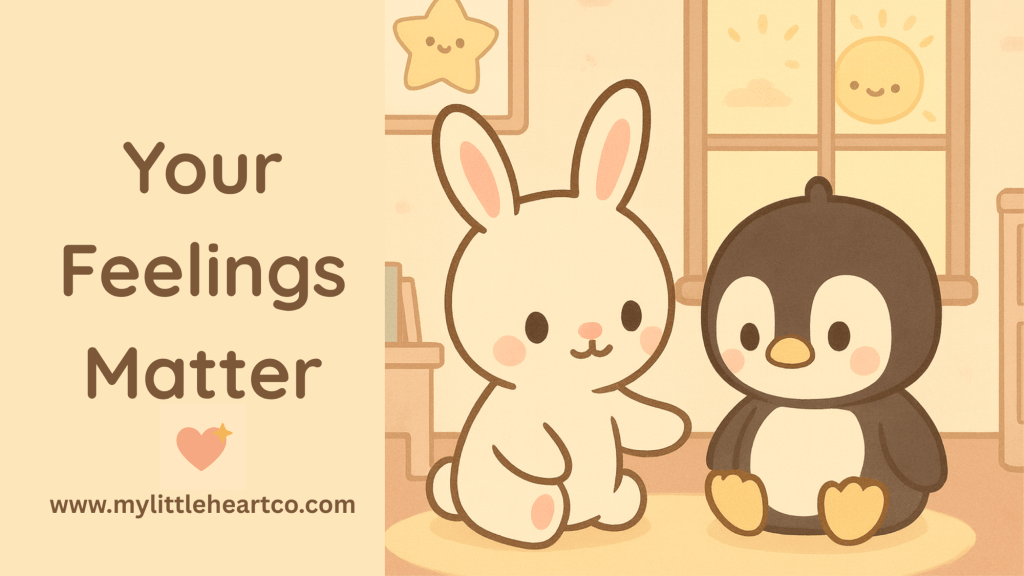
Why Emotions Matter in Childhood
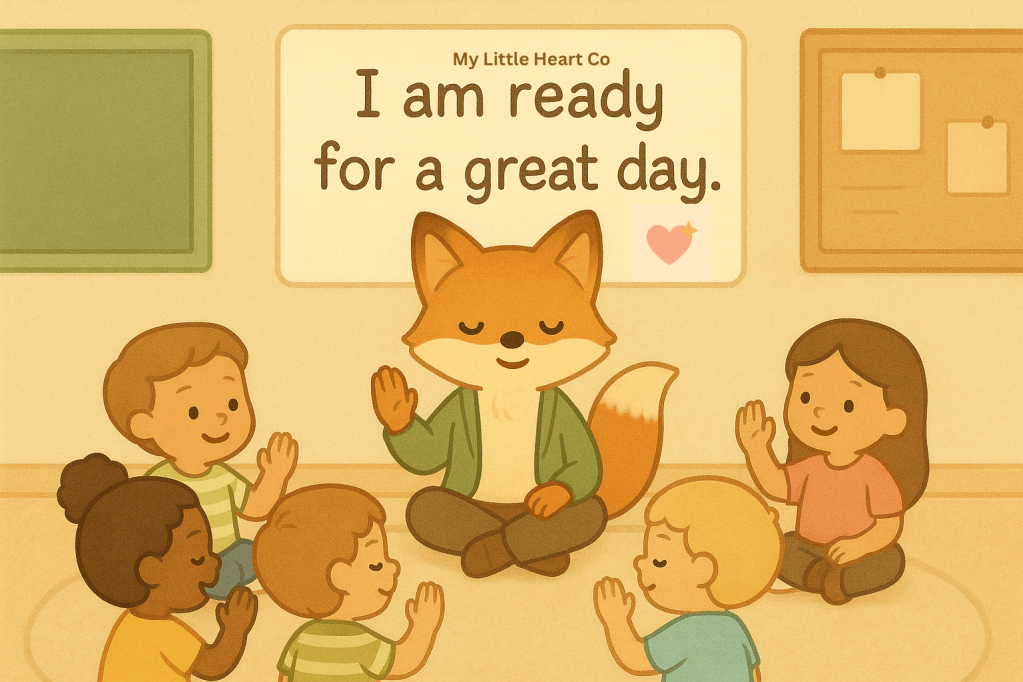
It was circle time in a bright, cozy classroom. A small voice whispered, “I’m mad, but I don’t know why.” The teacher knelt down, made eye contact, and replied gently, “That’s okay — let’s find the words together.”
In that moment, the child wasn’t just learning to label an emotion — they were learning that their feelings had value.
Later that day at home, a similar moment unfolded. A parent noticed their child quietly frowning during snack time. Instead of rushing past it, they paused and said, “You look a little upset. Do you want to tell me what happened?”
These small, intentional moments send a powerful message to children: You are seen. You are heard.
Why Helping Children Express Emotions Matters
When children feel safe to talk about their emotions, they gain far more than just vocabulary. They build:
- Self-awareness – understanding what they feel and why.
- Empathy – recognizing and respecting the feelings of others.
- Problem-solving skills – finding healthy ways to respond to challenges.
According to the Collaborative for Academic, Social, and Emotional Learning (CASEL), students who develop strong social-emotional skills are more likely to have positive relationships, succeed academically, and manage stress effectively.
Validating children’s feelings doesn’t mean agreeing with every reaction — it means showing them that their inner world matters and deserves respect.
The Science Behind Emotional Validation
Neuroscience tells us that when children can label their emotions, they activate the brain’s prefrontal cortex — the part that helps with problem-solving and self-control. This process, sometimes called “name it to tame it,” helps calm the amygdala, the brain’s emotional alarm system.
Dr. Daniel Siegel, author of The Whole-Brain Child, explains that simply putting feelings into words can reduce emotional intensity and make it easier for children to think clearly. This means that taking a moment to listen isn’t just kind — it’s literally shaping the child’s brain for better emotional regulation.
The Cost of Ignoring or Dismissing Feelings
When emotions are brushed aside, children often internalize one of two messages: “My feelings aren’t important” or “It’s not safe to share how I’m feeling.”
Over time, this can lead to:
- Withdrawal – the child stops opening up altogether.
- Frustration – emotions spill out through tantrums, outbursts, or defiance.
- Low confidence – they doubt their ability to handle challenges.
Example:
- Dismissed: A child says, “I’m scared about the school play,” and hears, “Don’t be silly, there’s nothing to be scared of.”
- Validated: The same child hears, “It’s okay to feel nervous. Want to practice together?”
The second response doesn’t erase the fear, but it teaches the child they are not alone in it.
A 5-Step Framework for Helping Children Speak About Their Feelings
1. Notice the Cues
Look for non-verbal signs — crossed arms, slumped shoulders, or a quieter-than-usual tone can be early indicators.
2. Name the Feeling
Offer language: “It looks like you might be feeling frustrated” or “I wonder if you’re feeling a little sad.”
3. Normalize the Emotion
Let them know it’s okay to feel that way: “Lots of people feel nervous before trying something new.”
4. Offer Ways to Express It
Encourage talking, drawing, using Feelings Check-In Cards, or role-playing. Some children will open up more through play than direct conversation.
5. Reflect Together
Once the emotion has been expressed, talk about what helped and what they might try next time. This builds self-regulation skills.
Case Study: From Silence to Sharing
In one kindergarten class, a child named Leo rarely spoke during group activities. His teacher began using a daily “Feelings Board” where students could place a small magnet under a face showing their mood. Within two weeks, Leo began moving his magnet from “sad” to “happy” and eventually started explaining why — even in front of the group.
At home, another child, Mia, often had bedtime meltdowns. Her parents started a “three things” ritual: one good thing from the day, one hard thing, and one feeling word. Bedtime stress faded as she learned to express herself before the frustration built up.
Creating an Emotion-Friendly Classroom
Teachers can make emotional expression part of the daily routine by:
- Morning feelings check-ins – Let students choose a card or emoji that matches their mood.
- Calm corner – Cozy seating, emotion visuals, and tools like stress balls or journals.
- Storytime with SEL themes – Books that model emotional expression, with pauses to ask, “How do you think they feel?”
- Modeling – Share your own simple feelings: “I’m feeling a little overwhelmed, so I’m going to take a deep breath before we start.”
These routines show students that emotions are a natural part of learning.
Supporting Emotional Expression at Home
Parents can nurture emotional openness with simple habits:
- Dinner table check-ins – Ask, “What was the best and hardest part of your day?”
- Bedtime reflection – Share one feeling from your day and invite your child to do the same.
- Car ride chats – Some kids open up more in side-by-side situations.
- Emotion games – Play “Guess the Feeling” or act out emotions for the other person to name.
Home should feel like a safe space for even the biggest, messiest feelings.
Why Tools Matter in Teaching Emotions
Feelings Check-In Cards
- Place them in a basket in the calm corner or on the fridge at home.
- Let children pick a card to match their mood at the start and end of the day.
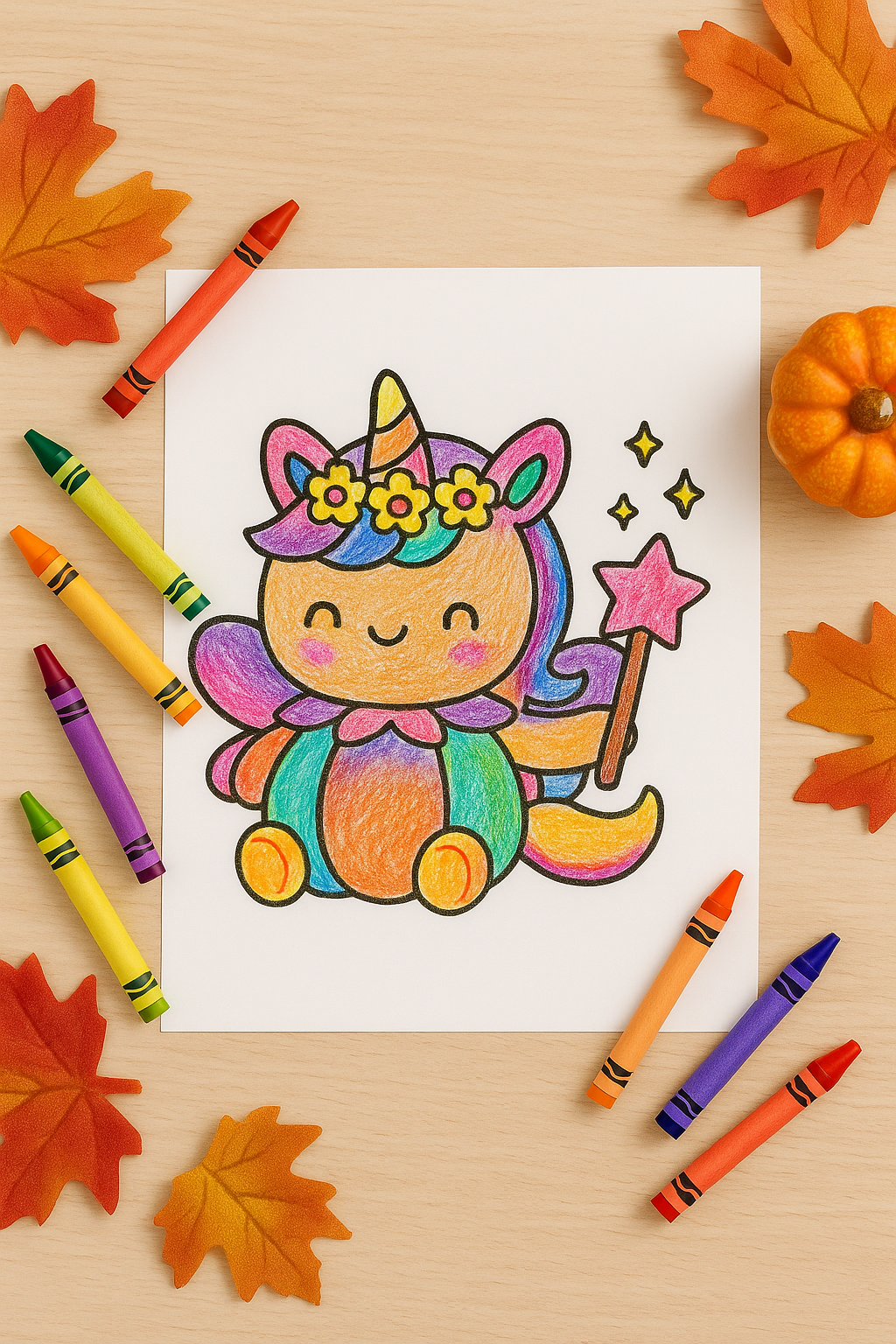
SEL Coloring Pages
- Provide a calming focus during discussions.
- Can be paired with prompts like, “Draw something that made you happy today.”
Storybooks with Relatable Characters
- After reading, ask questions like, “How do you think Percy felt when that happened?” or “What could Bree have done differently?”
These tools make emotional conversations natural and approachable.
Common Challenges & How to Overcome Them
Challenge: A child says “I don’t know” when asked how they feel.
Solution: Offer multiple-choice feelings or visuals to choose from.
Challenge: A child shuts down when emotions are discussed.
Solution: Try side-by-side activities like coloring or walking while talking.
Challenge: Limited time in the classroom.
Solution: Use quick 1–2 minute check-ins during transitions.
Long-Term Benefits of Valuing Feelings
When adults consistently validate emotions, children learn to:
- Trust their own feelings.
- Show empathy toward others.
- Handle challenges with confidence.
These skills carry into adolescence and adulthood, leading to stronger relationships, better conflict resolution, and a healthier self-image.
Questions to Ask to Help Kids Name Their Feelings
Sometimes children want to share but don’t know where to start. Open-ended, gentle questions can help them put their emotions into words without feeling pressured. Try:
- “What’s one thing that made you smile today?”
- “Was there a part of today that felt tricky or hard?”
- “What’s something you wish had gone differently?”
- “If your feelings were a color right now, what color would they be?”
- “What happened right before you started feeling that way?”
- “Is there something you need to feel better right now?”
These questions work well at home during bedtime or mealtimes, and in the classroom during morning meetings or calm corner check-ins. The key is to ask with genuine curiosity and give children space to answer — even if the silence feels long at first.
Reflection Challenge for Teachers & Parents
This week, choose one moment each day to pause and validate a child’s feelings.
Try this simple phrase:
“I see you’re feeling ____. That’s okay. Do you want to tell me more about it?”
Over time, you’ll see how even small moments of validation can change the way children view themselves and their relationships.
Closing Encouragement
Every time you pause to listen to a child’s feelings, you send a message that shapes their self-worth:
“Your voice matters. Your heart matters. You matter.”
Valuing emotions isn’t about avoiding conflict or keeping kids happy all the time. It’s about equipping them with the lifelong skills of self-awareness, empathy, and resilience — one conversation at a time.
Free Resource:
Want to make emotional expression easier for your students or children? Download our Feelings Check-In Cards and SEL Coloring Pages here.
Written by Angela Paschal, founder of The Little Heart Collection – a brand dedicated to creating SEL stories, activities, and affirmations that help kids shine bright.














 My Little Hearts Co.
Leave a comment